
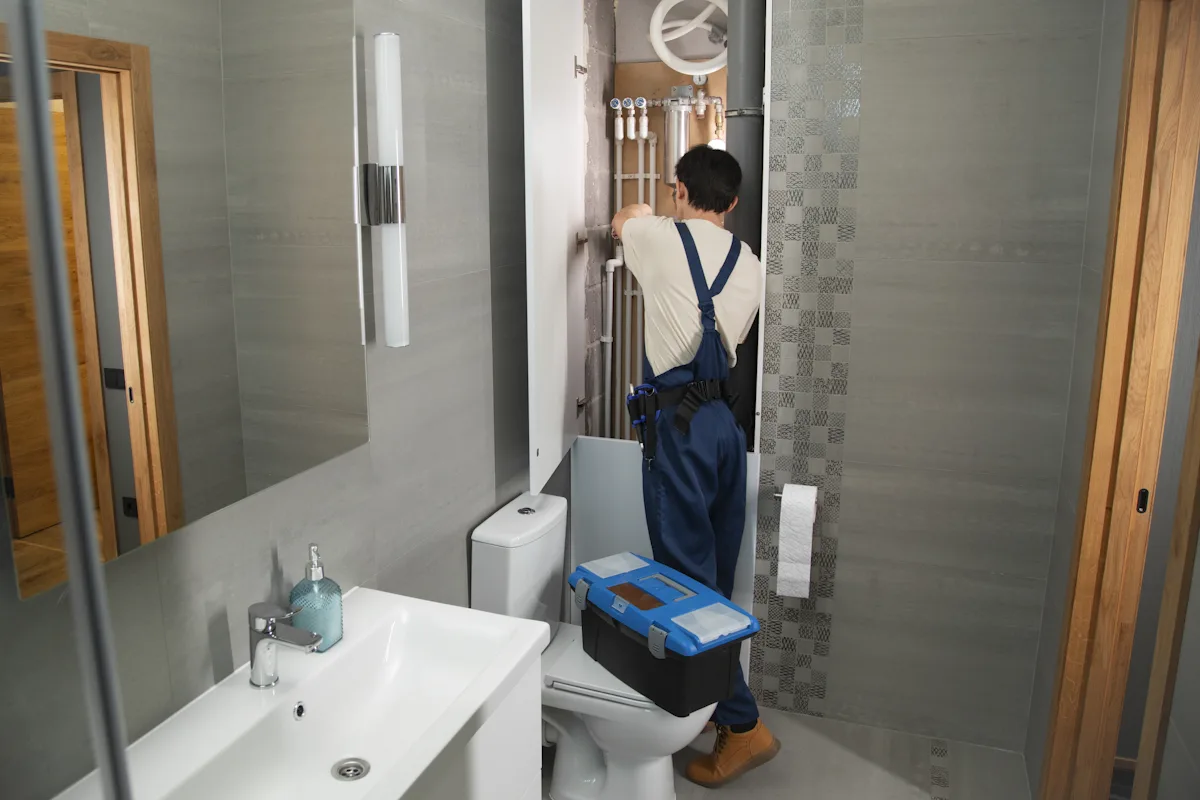
Ask most plumbers where their work comes from and they will say word of mouth. That is still true. What has changed is what happens next. Someone gets your name from a neighbour, types it into their phone, and looks for a reason to trust you before they ring. If nothing comes up, or the only thing that comes up is a Facebook page last posted on in 2021, they carry on scrolling to the plumber who does have a proper site.
A website for plumbers does not need to be clever. It needs to answer three questions fast: do you cover my area, do you do this kind of job, and can I get hold of you now. This post covers the pages, the proof and the forms that do that, and how to put it together yourself without paying an agency.
What a plumber's website actually needs
Keep it small and make every page earn its place. Five pages will do more than fifteen.
Home — who you are, the areas you cover, what you fix, your phone number visible without scrolling.
Services — one clear section per job type: boiler repairs, leaks, bathroom installs, radiators, emergency callouts.
Areas covered — name your towns and postcodes in plain text, not just on a map image.
Reviews and past work — photos of finished jobs and a handful of quotes from real customers.
Contact / request a quote — a short form (name, number, postcode, what is wrong, photo if they have one) plus your phone number again.
Emergency and callout work is the exception to "keep it simple". If someone has water coming through a ceiling they are not reading your About page. Phone number at the top, big, tappable, on every page.
The proof that turns a visit into a call
Plumbing is a trust purchase. People are letting a stranger into their home and they have all heard a horror story. Put the reassurance where they will see it:
Gas Safe registration number (if you do gas work), displayed clearly.
Public liability insurance, mentioned in a line.
Before and after photos from real jobs. Phone photos are fine. They beat stock images every time.
Five or six recent reviews with first names and towns.
Your pricing approach, even if you cannot give fixed prices. "Callout £60, first hour included, no charge for a quote on larger work" beats saying nothing.
Take a plumber in Sheffield who does mostly boiler repairs and bathroom refits. His site has a Boiler Repairs section with six photos of finished work, his Gas Safe number under the heading, eight reviews, and a quote form asking for a photo of the boiler. He can price half the enquiries from his van before he calls back. That is the whole job of the site.
Do plumbers need a website, or is Checkatrade enough?
Directory listings like Checkatrade and Rated People bring enquiries, but they charge for leads, they put you side by side with your competitors, and you do not own the page. A website for plumbers costs from around £19.99 a month, sends every enquiry straight to you with no lead fee, and gives people who already have your name somewhere to check you out. Most plumbers do best with both: the directory for cold leads, the website for the referrals and Google searches you already earn.
Local SEO for plumbers, the short version
Set up a Google Business Profile and keep the opening hours and phone number the same as on your site.
Write your town names into your headings and body text, not just in the page title.
Give each main service its own section with the words people actually search: "emergency plumber Leeds", "boiler repair Wakefield".
Ask every happy customer for a Google review. Two a month adds up quickly.
Make sure the site loads fast and works on a phone, because that is where nearly all of these searches happen.
Building it yourself
You do not need a developer for any of this. aceSites is a DIY website builder made for sole traders: you sign up, pick a theme, drag your sections into place and type your own copy. The Starter plan is £19.99 a month and includes a free subdomain, contact forms that email straight to your inbox, SEO tools, SSL and unlimited page sections. Professional is £29.99 a month if you want your own domain like yourplumbing.co.uk. There is a 30-day free trial on both, no card needed, so you can start a free trial at https://ace-sites.co.uk and have a play with a couple of sections tonight to see how it feels.
The other advantage of doing it yourself: when you add a new service or change your callout charge, you log in and change it in two minutes. No waiting on an invoice. If that is the part you care about most, it is worth reading our guide to easy to update websites, and if you are wondering how much speed matters for a trade site, we covered that in fast websites for small business.
If you run another local service business, the same DIY approach applies. For example, here is how websites for cleaners tackle the same job of turning a local search into a booked job.
The takeaway
A plumber's website has one job: take someone who already half trusts you and give them a reason to ring. Clear services, real photos, your registration number, reviews, and a quote form that takes thirty seconds. Five pages, done properly, beat a big site that says nothing. If you fancy building it yourself, you can start a free 30-day trial with aceSites (no card needed) and build your own site from £19.99 a month at https://ace-sites.co.uk.