
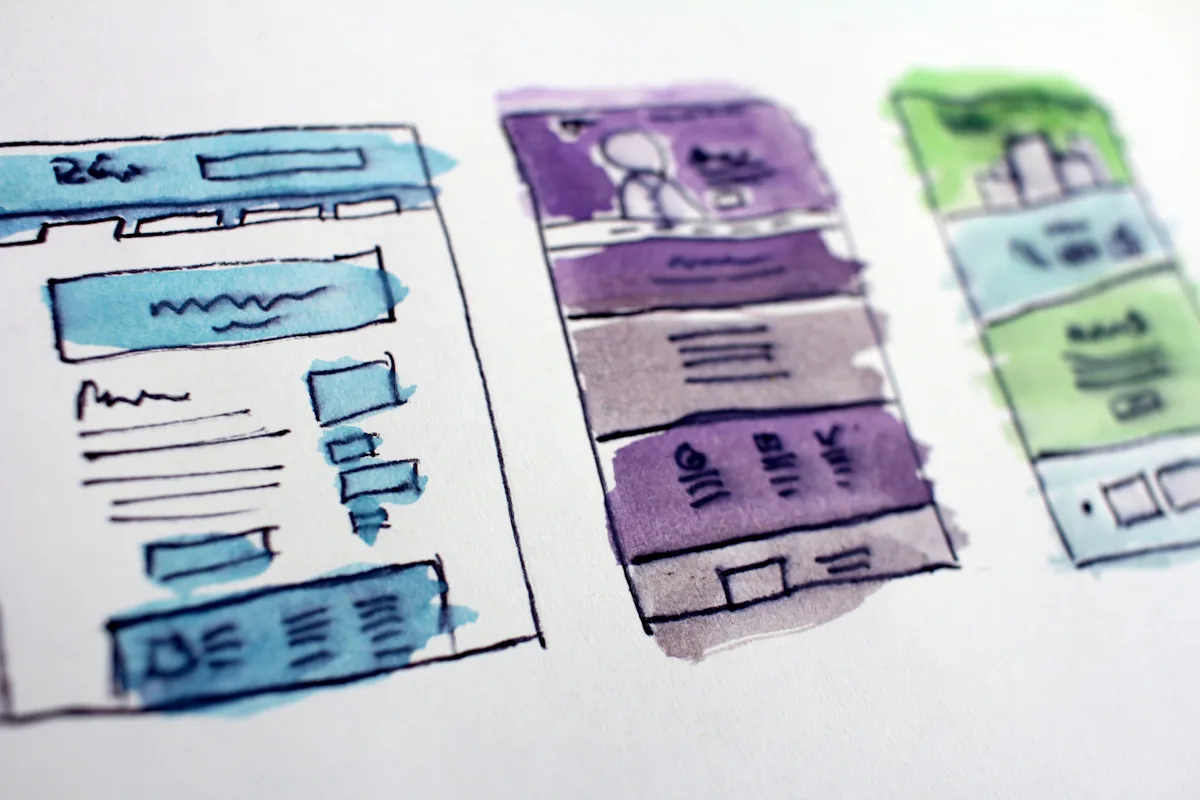
Getting a website used to mean finding someone who could code, waiting a few weeks, and paying whatever the invoice said. That is not the situation any more. Plenty of UK sole traders now build their own site in an afternoon, then tweak it whenever they fancy, without ever opening a line of code.
If you have been putting it off because you assume you need a developer, this post is for you. We will go through what building your own website actually involves in 2026, the parts people find easy, the three bits that tend to trip owners up, and how to avoid paying for things you do not need. No jargon, no assumed technical knowledge.
Can you build a website without a developer?
Yes. For a standard small business site, a few pages, photos, a contact form and your services, you do not need a developer at all. Modern website builders use a visual editor, so you click on text to change it and drag sections into place, the same way you would move a slide around in a presentation. A developer only becomes worth the money when you need something genuinely custom, like a booking system built from scratch or a shop with unusual stock rules.
What you can honestly do yourself
Most of a small business website is writing and choosing, not building. Here is what falls to you when there is no developer involved:
Deciding your pages. For most trades this is home, services, about, and contact. Four pages is plenty to start.
Writing the words. You know your job better than any copywriter does. Write like you speak to a customer on the phone.
Picking photos. Real photos of your work beat stock images every time, even if they came off your phone.
Choosing colours and fonts. Pick two colours and one font, then stop. Restraint looks more professional than variety.
Setting up a contact form. In a good builder this is a case of dropping the form in and typing the email address you want enquiries sent to.
Hitting publish. That is the whole deployment step now.
Say a mobile nail technician in Maidstone wants to get online. She would write a short home page explaining her area and prices, add a gallery of twelve sets she has done recently, embed her Fresha booking link so people can book without messaging her at 11pm, and add a contact form for everything else. That is a working website, and none of it needs a developer.
The three things people get stuck on
Structure. Staring at a blank page is horrible. The fix is to start from a template that already has the sections in a sensible order, then swap the content for your own.
Perfectionism. Owners often spend three weeks nudging a button and never publish. A live, slightly rough website earns you more than a perfect one sitting in drafts. Publish, then improve it next Tuesday.
Domains and email. This is the one properly fiddly bit. If you want yourbusiness.co.uk rather than a free subdomain, you will need to buy the domain and point it at your site. It is a ten minute job with instructions, but it is the point where most people want a real person to ask. Worth checking your builder has humans on support before you commit.
What it costs to do it yourself
Doing it yourself is far cheaper than commissioning a build. A UK freelancer or agency site typically runs into the hundreds or thousands of pounds up front, plus a fee every time you want a price changed. A builder subscription is a fixed monthly cost with unlimited edits included. If you want the full picture, we broke down the small business website cost across every price band.
aceSites is the affordable DIY route. Starter is £19.99 a month and includes the visual editor, your own branding and theming, contact forms delivered to your inbox, SEO tools, SSL and unlimited page sections, on a free yourname.ace-sites.net subdomain. Professional is £29.99 a month and adds a custom domain. Both come with a 30 day free trial, no card needed, so you can start a free trial and have a play at ace-sites.co.uk before you decide whether it is for you.
Make sure you can still edit it afterwards
This is the part people forget. Building the site is one afternoon. Living with it is the next five years. Before you commit to any tool, check you can change a price, add a photo and update your opening hours yourself, in minutes, without asking anyone. That is the real test of an easy to update website, and it is the difference between a site that stays accurate and one that quietly goes stale.
The short version
You do not need a developer to have a website that looks the part and brings in enquiries. You need four decent pages, honest photos, a contact form that works, and a tool that lets you change things yourself later. Start simple, publish sooner than feels comfortable, and improve it as you go. If you want to try it, aceSites gives you a 30 day free trial with no card, and plans from £19.99 a month at ace-sites.co.uk. Have a play and see how far you get in an afternoon.